Blackswan Space secures €2.5M to advance autonomous spacecraft navigation
Lithuanian space technology company Blackswan Space has closed its second investment round with €2.5 million in new funding. The round was led by Iron Wolf Capital. Combined with its previous pre-seed round, Blackswan Space has now raised a total of €3.2 million.
The round also included existing investors Lemonade Stand and former NanoAvionics co-founder Linas Sargautas. New participants included NGL Ventures and Tomas Žalandauskas, who has also founded several high-tech companies in Lithuania.
Founded in 2019, Blackswan Space is developing technologies for autonomous space missions. Its products include the Mission Design Simulator (MDS), which is designed to model and plan next-generation autonomous missions, and the RPO Kit, a plug-and-play spacecraft payload for autonomous rendezvous and proximity operations. The system uses advanced vision-based technology to detect, identify, and track targets while carrying out complex navigation manoeuvres.
The company has grown from a two-person technical team into a 25-member workforce operating across Vilnius, London, and Denver.
With the number of satellites in orbit continuing to increase, Blackswan’s technology is designed to help space operators carry out tasks such as autonomous asset inspection, satellite servicing, collision avoidance, and mission management without having to develop these complex systems internally.
The company’s pre-seed funding helped it commercialise its Mission Design Simulator and secure several customers across Europe and the US, including Auria Space. The latest investment will support the commercialisation of its RPO Kit and help accelerate Blackswan’s expansion in the US.
A key milestone will come with the company’s planned in-orbit test of the RPO Kit, currently scheduled for Q4 2027. The test is expected to mark an important step toward bringing the system to market.
Blackswan Space is also preparing for ASTRAL (Advance Satcom Technology with Refuelling and Logistics), its first European in-space refuelling mission, which is planned for 2028.
The ASTRAL mission is supported by up to €3.3 million in funding from the UK Space Agency and the European Space Agency (ESA).
Jake Geer, managing director of Orbit Fab UK, said:
“This team has proven themselves to be highly capable and driven from the very beginning. That and their strong relationship with ESA is why we selected Blackswan to provide one of the most critical components – the RPO Kit – for our upcoming first European refuelling demonstration mission “ASTRAL”, flying in 2028.”
According to Viktoras Jucikas, founding partner at Iron Wolf Capital, a satellite in orbit today is blind and deaf without the ground.
“It cannot tell what has parked next to it, cannot avoid a collision on its own, and cannot be easily repaired or refuelled. Blackswan Space is working to change that. Its navigation payload gives spacecraft their own eyes and the intelligence to manoeuvre relative to another object.
At Iron Wolf Capital, we back the technologies Europe cannot afford to depend on third-countries to provide, and we back them early. Autonomy in orbit is one of them, and Blackswan is building it."
Marius Klimavičius, CEO of Blackswan, said:
“We are very excited to have closed our latest investment round. I am particularly proud that all our current investors are local, coming from Lithuania and Estonia. This is no small feat for a company like Blackswan Space, considering that pockets were never that deep for space startups in our region.
This achievement is testament to the work and effort that went into developing our unique technology as well as growing the business to stack up and succeed even against much bigger players."
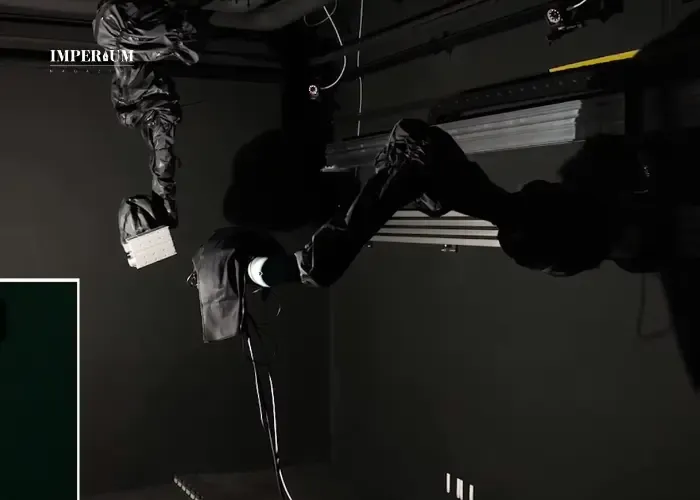
The company has been carrying out extensive testing to validate the performance of its simulation and vision-based navigation (VBN) technologies, which power its Mission Design Simulator and RPO Kit.
According to Klimavičius, the company’s immediate priority is to demonstrate that its existing technology can perform reliably in space, opening the door to new market opportunities.