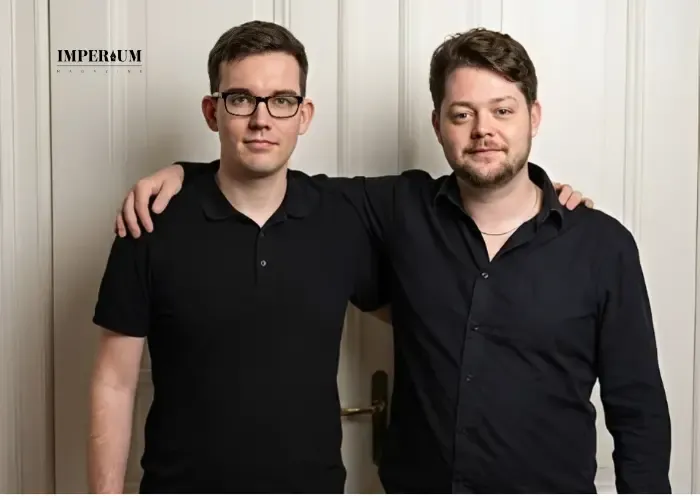
Deepslate secures €7.7M to expand its European voice AI platform
Berlin-based voice AI company Deepslate has raised €7.7 million in seed funding to accelerate the development and expansion of its voice AI technology. The round was led by Munich-based technology investor 42CAP, with participation from Alstin Capital, existing investor SIVentures, and several business angels.
Deepslate develops its own speech-to-speech AI models that process spoken language directly instead of first converting speech into text. The company focuses on European languages and operates its technology entirely within the European Union.
Traditional voice AI systems typically follow several steps: speech is converted into text, the text is processed by a language model, and the response is then converted back into speech. Deepslate takes a different approach with an end-to-end model that processes incoming audio directly and produces an audio response. The company says this can reduce response times while preserving details of spoken communication, including tone, emphasis, dialect, and other vocal characteristics.
Its technology is built around three components developed and trained in-house: a speech encoder, a reasoning engine based on an open-weights language model that Deepslate post-trains for individual languages, and a speech decoder that turns the response into spoken audio. This architecture also allows the company to replace the underlying language model without having to retrain the entire system.
According to Deepslate, its model achieved a response time of 440 milliseconds in an independent Artificial Analysis benchmark, making it the fastest speech-to-speech model measured in that benchmark as of September 2026. The company also reports that its technology delivered the lowest error rate in the comparison for European languages in the CoVoST2 benchmark. Deepslate is also ISO 27001 certified.
The technology is already being used in production by insurers, contact centres, and other platforms. Deepslate provides access to its models through a self-service platform and API, while platform providers and enterprise customers can also access volume and self-hosting options.
For our customers, data sovereignty is not a nice-to-have, it is a prerequisite. And either it can be verified or it is worthless. That is why we disclose where the computing happens, who our subprocessors are and what is still open,
said Paskal Paesler, co-founder of Deepslate.
With the new investment, Deepslate plans to expand its model training and European data initiatives, with a particular focus on German street names, personal names, and regional dialects. The company will also work on reducing response times and improving overall voice quality.
At the same time, Deepslate plans to strengthen its sales and marketing teams and expand its production infrastructure across European data centres to handle growing call volumes.