Helsingborg AI Startup Klang Raises €1.32M and Launches Open Swedish Speech-to-Text Model
Klang, a Helsingborg-based AI company that transcribes, summarises, and analyses interviews, meetings, and conversations, has raised €1.32 million (SEK 15 million) in new funding at a valuation of €13.2 million (SEK 150 million).
The funding round was supported by existing shareholders and led by entrepreneur and tech investor Johan Lenander, along with Emil Sjödin, founder of Refined, and Daniel Gadd, co-founder of Position Green, among other investors.
“In a world where AI performs more and more tasks, human conversation becomes an increasingly important source of information. At the same time, today’s technology for understanding conversations is still limited. Our vision is that what is said should never be lost. We want to create a perfect memory of every conversation – a memory that not only remembers what was said, but also understands the conversation as well as, or even better than, the people in the room,” said Niklas Silfverström, co-founder and CEO, Klang.
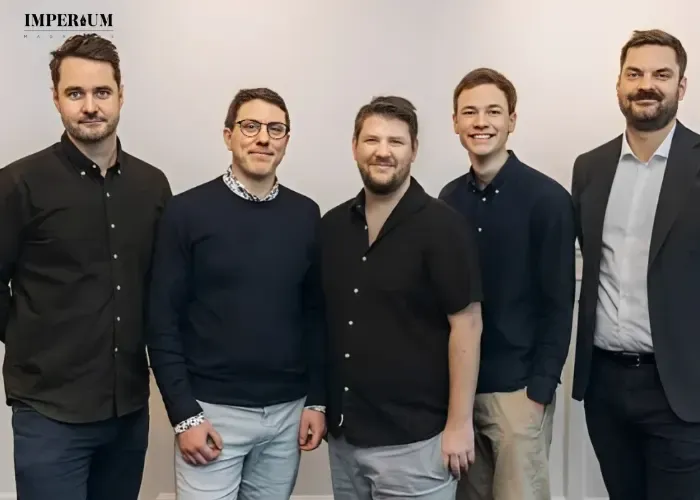
Founded in 2023 by Silfverström, Viktor Silfverström, Andreas Argelius, Mattias Fält, and Jacob Andersson, Klang develops AI tools for transcribing, summarising, and analysing conversations.
The company says it has spent the year investing heavily in its own speech and language models to process real-time conversations quickly and accurately. The technology is designed to scale, helping Klang expand into new markets more easily.
Klang recently launched Pianissimo, its first open speech-to-text model built specifically for Swedish. The model is trained to recognise Swedish and different Swedish dialects and can run locally on a standard laptop. As an open-source model, Pianissimo is freely available for users to access, modify, and build on.
According to Klang, Pianissimo is based on Nvidia’s Parakeet, an open speech-to-text model designed for fast and efficient transcription. Klang has optimised it for Swedish and its regional dialects. In the company’s tests, Pianissimo achieved accuracy comparable to KB Whisper Large, which Klang describes as the National Library of Sweden’s leading open Swedish model, while running around 60 times faster.
“We’re building more and more technology that needs real-time transcription ourselves, but we’ve lacked an open model adapted for Swedish that combines high quality with the speed we need. The fact that Pianissimo runs on ordinary consumer hardware also opens up entirely new kinds of services. Now we’re looking forward to seeing what others build on the model,” said Mattias Fält, Head of AI, co-founder and lead for Pianissimo at Klang AI.
Klang’s long-term goal is to build a platform that acts as a complete, searchable memory of conversations across companies and organisations. The platform is designed to help AI understand not only what was said, but also the context, nuances, dialects, and connections between different conversations.
The company also emphasises that its technology is developed and operated in Sweden, with its own AI models designed to meet European data protection requirements.
“AI is changing not only the product we build but also how we build the company. A small, technically strong team can today achieve what used to require a much larger organisation. Now we above all want to pick up the pace in research, product development and distribution,” Silfverström added.
Klang plans to use the new funding to continue developing its AI technology and support international expansion. The company expects to hire around 10 employees across research, development, marketing, and other areas. In the short term, Klang is targeting growth across the Nordic countries, Benelux, the DACH region, and Japan.
On 12 August 2026, Klang officially launched in Japan, allowing users to record, transcribe, and summarise conversations through a Japanese-language interface. Both its web platform and iOS and Android apps have been localised for the Japanese market.